
















Establishing a Resident-Participatory Monitoring System for Invasive Plants on Amami Ōshima
Faculty of Agriculture,International Center for Island Studies,Southern Kyushu and Nansei Islands Innovation Center,Southern Kyushu and Nansei Islands Innovation Center
Ugawa Shin,Suzuki Eiji,Okuyama Masaki,NAKASHIMA Keiji
- amami
- yamato
- uken
- setouchi
- tatsugou
Background and objectives of activities
Amami Ōshima has been recognized as a vital habitat for numerous endemic species, including endangered ones, and has been inscribed as a World Natural Heritage site. However, various invasive plant species have been encroaching on Amami Ōshima, raising concerns that they may displace native plants from their natural habitats. Therefore, collaborative monitoring efforts with local communities are essential to detect the invasion of these plants as early as possible.
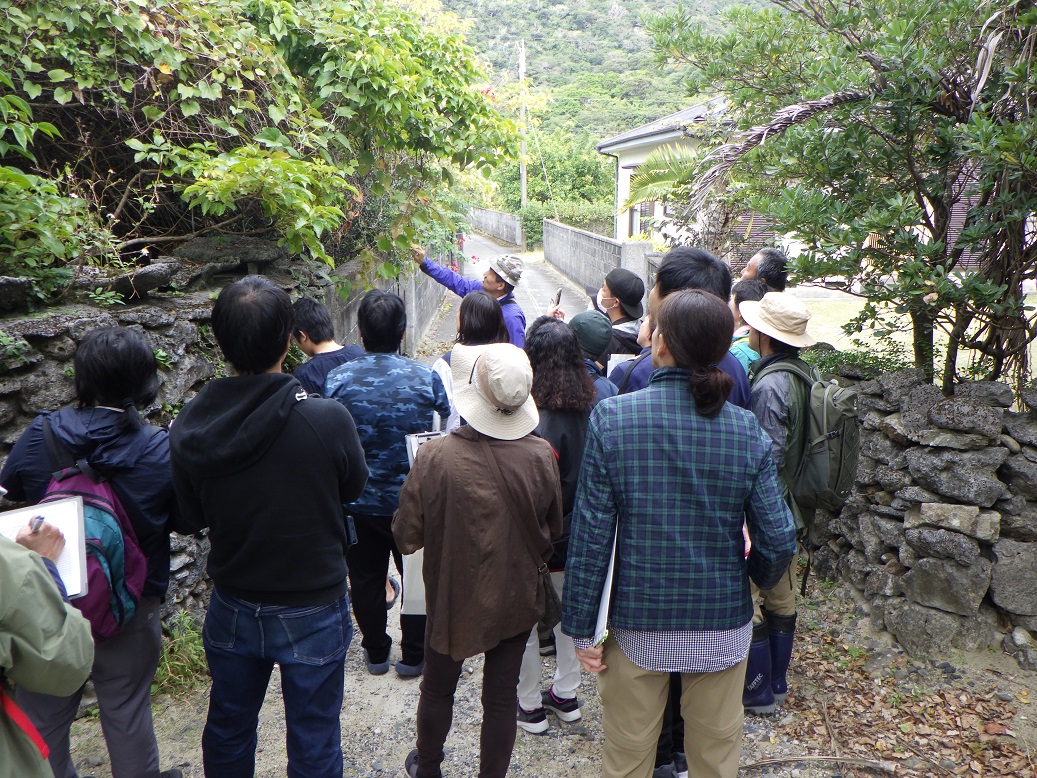
Summary of Activities
This initiative holds on-site workshops on Amami Oshima for residents interested in participatory invasive plant monitoring. Workshop participants conduct their own plant surveys across the entire island and report findings to Kagoshima University, particularly when invasive plants of concern are discovered. Starting in fiscal year 2025, outreach classes at high schools have been launched to encourage broader participation.
Expected Benefits
On Amami Oshima, a community-based monitoring system is being developed to detect the early invasion of non-native plants that could threaten biodiversity. In 2024, participants in this monitoring program led to the early discovery of the invasive plant species, giant hogweed, on Tokunoshima. This initiative not only contributes to preserving Amami Oshima's biodiversity but also provides local residents with an opportunity to develop an interest in the island's natural environment.